Berkman Center Webcast live oggi ore 18.30 - Permission Taken

Permission Taken http://cyber.law.harvard.edu/events/luncheon/2013/03/gillmor *Dan Gillmor, founding director of the Knight Center for Digital Media Entrepreneurship* Today, 6.30 pm Webcast live: http://cyber.law.harvard.edu/interactive/webcast http://nexa.polito.it/berkman-webcast-live Once, personal technology and the Internet meant that we didn't need permission to compute, communicate and innovate. Now, governments and tech companies are systematically restricting our liberties, and creating an online surveillance state. In many cases, however, we're letting it happen, by trading freedom for convenience and (often the illusion of) security. Yes, we need better laws and regulations. But what steps can we take as individuals to be more secure and free -- to take back the permissions we're losing? About Dan Dan Gillmor teaches digital media entrepreneurship and is a founding director of the Knight Center for Digital Media Entrepreneurship at Arizona State University's Walter Cronkite School of Journalism and Mass Communication <http://cronkite.asu.edu/>. The Center, originally funded by the Knight Foundation <http://knightfoundation.org/> and Kauffman Foundation <http://kauffman.org/>, is working to help create a culture of innovation and risk-taking in journalism education, and in the wider media world. Dan is currently working on a new book and web project, tentatively entitled Permission Taken, about the increasing control that companies and governments are exerting over the way we use technology and communicate, and how we can take back some of that control. He has posted an outline here <https://docs.google.com/document/d/1vCAKdIPxgda5ZfjKZs-Hg0CAOmm3k_w90TDds1Cz...>.

The Web We Lost http://cyber.law.harvard.edu/events/luncheon/2013/04/dash *Anil Dash, entrepreneur, technologist and writer* Today, 6.30 pm Webcast live: http://cyber.law.harvard.edu/interactive/webcast http://nexa.polito.it/berkman-webcast-live In the past decade, we've seen the rise of powerful social networks of unprecedented scale, connecting millions or even billions of people who can now communicate almost instantaneously. But many of the promises that were made by the creators of the earliest social networking technologies have gone unfulfilled. We'll take a look at some of the unexamined costs, both cultural and social, of the way the web has evolved. About Anil Anil Dash is an entrepreneur, technologist and writer acknolwedged as a "blogging pioneer" by the New Yorker for having started his site Dashes.com <http://dashes.com/> in 1999 as one of the earliest and most influential blogs on the Internet. Today his work focuses on applying the techniques and technologies of the startup world to the transformation the major institutions of society and culture. Dash is cofounder of Activate <http://activate.com/>, the strategy consulting firm which helps the world's major media and technology companies reinvent their businesses, and cofounder and CEO of ThinkUp <http://thinkup.com/>, a new app which helps people get more meaning out of the time they spend on social networking. In addition, Dash is an active advisor to several of the most prominent and innovative technology startups and non-profit organizations and has been a columnist for Wired magazine. [More.. <http://dashes.com/anil/about.html#bio>]
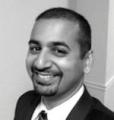
Work here: have a voice and change the world http://cyber.law.harvard.edu/events/luncheon/2013/04/whitney *Heather Whitney, Berkman Fellow* Today, 6.30 pm Webcast live: http://cyber.law.harvard.edu/interactive/webcast http://nexa.polito.it/berkman-webcast-live Companies like Google and Twitter and Facebook are thought to provide some of the most envied work environments <http://www.nytimes.com/2013/03/16/business/at-google-a-place-to-work-and-pla...> on the planet. These employers promise not only tons of "perks" but the opportunity to work collaboratively on incredibly important, intellectually challenging, and cool problems that matter. These employers also promise employees a real voice <https://twitter.com/jobs/why_work> in the company through things like weekly all-hands where employees can ask top level executives tough questions and a generally flat corporate structure. These are high trust, high cooperation, open work environments and studies have shown they pay off -- employees work harder and companies do better. But should employees be worried that their trust in their employer, so purposefully cultivated, has been built on promises that are more illusion than enforceable promise? What happens when employees, enticed by these dream-like environments and promises of doing good, see their employer make choices that appear anything but? From unilateral and dramatic changes in working conditions (e.g. taking away work from home <http://newsroom.blogs.cnn.com/2013/02/27/yahoo-ceo-marissa-mayer-pulls-the-p...> being only a recent example) to normatively-laden business decisions (e.g., entering oppressive regimes and handing over user data to them, using software patents offensively [or not <http://bits.blogs.nytimes.com/2012/04/17/twitter-empowers-engineers-with-new...>], or even donating money to political candidates employees ideologically oppose <http://fivethirtyeight.blogs.nytimes.com/2012/11/28/in-silicon-valley-techno...>), are these employers holding up their end of the bargain? Are employees really getting a voice that commands employer response? Some in the labor movement think these employers create nothing more than a mirage, that like the now-prohibited company unions of the past, these employers work to ensure workers feel a sense of ownership and voice but, when push comes to shove, have nothing the company cannot just as easily take away. Others, including many who work at these companies, disagree. This talk will outline the debate and try to make headway towards some answers. About Heather Heather Whitney is a Berkman fellow and J.D. candidate at Harvard Law School, where she heads up Submissions for the Journal of Law and Technology. Heather received her B.A., summa cum laude, from UCLA in Philosophy (spending much of her time thinking about the intersection of ethics and emerging technologies). Prior to law school, she worked on Google's Global Ethics and Compliance team for three years. During law school, she's worked at the Federal Trade Commission, Jenner & Block's Washington D.C. office, and on Facebook's global policy team. She is currently writing an article examining whether we should rethink the ban on company unions, particularly in work environments like Google.

How to archive for the future? Ensuring the Present benefits from a Relevant Past http://cyber.law.harvard.edu/events/luncheon/2013/04/caron * Daniel J. Caron, Deputy Head and Librarian and Archivist of Canada and Eric Mechoulan, Université de Montréal* Today, 6.30 pm Webcast live: http://cyber.law.harvard.edu/interactive/webcast http://nexa.polito.it/berkman-webcast-live If we want to preserve accessibility to valuable information about legal, political, social and cultural discourses in an era of information abundance, it becomes vital to design carefully how we distinguish between noise and significant pieces of information. In order to secure our future, we need to know how to organize our past. About Daniel Daniel J. Caron joined the federal public service in 1982. In 2009, he was appointed Librarian and Archivist of Canada. One year later, he launched the modernization initiative to ensure that Library and Archives Canada could meet the multiple challenges of the digital environment. This initiative is a call for collaboration, epistemologically grounded institutional policies and policy driven decisions. In addition to his organizational experience, Mr. Caron is a seasoned author and speaker on public administration and issues related to information and memory both in Canada and abroad. Mr. Caron has also taught in several Canadian universities. He holds a bachelor's degree and a master's degree in Economics from the Université Laval, and obtained a doctorate in Applied Human Sciences from the Université de Montréal. Mr. Caron has been Chair of the Forum of National Archivists for the International Council on Archives since 2010. He is the author of WEB HT.0 /Pour une société informée: la pertinence numérique et ses défis pour les sociétés démocratiques au XX1e siècle/, Hermann 2011. About Eric Eric Mechoulan is a professor at the Université de Montréal and visiting prof at Harvard, chair of the Intermedial Research Center on Letters, Arts and Techniques as well as the Interdisciplinary Research Center on Emerging Technologies (Montreal). His most recent research project is about "Archiving in the digital age". Recent publications : special journal issue on "Archiving", /Intermediality, 2012; D'où nous viennent nos idées? Métaphysique et intermédialité, VLB, 2010; La culture de la mémoire/, PUM, 2008.

Personalized Learning, Backpacks Full of Cash, Rockstar Teachers, and MOOC Madness http://cyber.law.harvard.edu/events/luncheon/2013/05/reich * The Intersection of Technology, Free-Market Ideology, and Media Hype in U.S. Education Reform with Justin Reich, Berkman Center Fellow* Today, 6.30 pm Webcast live: http://cyber.law.harvard.edu/interactive/webcast http://nexa.polito.it/berkman-webcast-live For decades, policymakers and futurists have heralded digital tools as essential to the the future of learning. Has the moment of disruptive transformational revolution finally arrived? If we are at a watershed moment, what futures are available to us? Researchers are developing new methods to leverage big data for personalized learning systems. Free-market advocates are envisioning how online learning could let students use vouchers not only to buy whole school experiences, but to buy individual courses from multiple vendors. Most radical of all, technologists and policymakers are exploring ways of using technology to "unbundle teaching", to create a suite of new roles in schools from rockstar teachers to full-time remote classroom observers, much as health care has shifted from the general practitioner to teams comprised of a few surgeons and many orderlies. In this luncheon presentation we'll explore the different futures made possible by these digital tools, and examine the political and civic implications of transforming schools and learning with networked technologies. About Justin Justin Reich is an educational researcher interested in the future of learning in a networked world. Currently, he is a Fellow at the Berkman Center for Internet and Society, a visiting lecturer at MIT, and the director of online community, research, and practice at Facing History and Ourselves. Justin is the co-founder of EdTechTeacher, a professional learning consultancy devoted to helping teachers leverage technology to create student-centered, inquiry-based learning environments. He earned his doctorate from Harvard University, where he led the Distributed Collaborative Learning Communities project, a Hewlett Foundation funded initiative to examine how social media are used in K-12 classrooms. He writes the EdTechResearcher blog for Education Week, and his writings have appeared in Educational Researcher, the Washington Post, the Christian Science Monitor, and other publications. Links * The Yoking of Virtual Schools and Market-Based Reforms <http://blogs.edweek.org/edweek/edtechresearcher/2012/09/the_yoking_of_virtua...> * Battling over the Meaning of Personalization <http://blogs.edweek.org/edweek/edtechresearcher/2012/06/battling_over_the_me...>

Cyber War Is Not the Answer, But What Is? Addressing Cyber Conflict While Protecting Privacy and Internet Freedom http://cyber.law.harvard.edu/events/luncheon/2013/05/edgar * Timothy H. Edgar, Visiting Fellow at the Watson Institute and Adjunct Professor of Law at the Georgetown University Law Center.* Today, 6.30 pm Webcast live: http://cyber.law.harvard.edu/interactive/webcast http://nexa.polito.it/berkman-webcast-live What does talk of cyber war mean for our liberties? The United States has a new military command for cyberspace, with the Director of the National Security Agency (NSA) as its commander. At the same time, the Secretary of State has announced that the "freedom to connect" is an aspect of fundamental human rights and has criticized countries that attempt to filter the Internet. Computer networks remain insecure, as sensitive data is leaked or stolen at increasing rates. This talk will examine the legal powers available to addressing network and computer insecurity and their impact on privacy, civil liberties and other fundamental values. About Tim Timothy H. Edgar is a visiting fellow at the Watson Institute and is an Adjunct Professor of Law at the Georgetown University Law Center. His work focuses on the unique policy challenges posed by growing global cyber conflict, particularly in reconciling security interests with fundamental values, including privacy and Internet freedom. Mr. Edgar served under President Obama as the first ever Director of Privacy and Civil Liberties for the White House National Security Staff, focusing on cybersecurity, open government and data privacy initiatives. From 2006 to 2009, he was the first Deputy for Civil Liberties for the Director of National Intelligence, reviewing new surveillance authorities, the terrorist watchlist, and other sensitive programs. He has also been counsel for the information sharing environment, which facilitates the secure sharing of terrorism-related information. Prior to his government service, Mr. Edgar was the national security and immigration counsel for the American Civil Liberties Union, where he spearheaded the organization's innovative left- right coalition advocating for safeguards for a number of post-9/11 counterterrorism initiatives, including the USA Patriot Act. He frequently testified before Congress and appeared in major television, radio and print media. Publications include contributions to Patriot Debates (American Bar Association 2005), America's Battle Against Terrorism (with Nadine Strossen) (Greenhaven Press 2005) and Women Immigrants in the United States (Woodrow Wilson Center for Scholars 2002), and Constitutional Governance in the Democratic Republic of the Congo, 25 Texas International Law Journal 207-237 (with Michael D. Nicoleau) (Spring 2000). Mr. Edgar was a law clerk to Judge Sandra Lynch, United States Court of Appeals for the First Circuit. He has a J.D. from Harvard Law School, where he served on the Harvard Law Review, and an A.B. from Dartmouth College. Links The Obama Administration's approach: * Cybersecurity Coordinator Michael Daniel's speech <http://www.whitehouse.gov/sites/default/files/docs/2013-02-28_final_rsa_spee...> at RSA in 2013. * Executive Order 13636, "Improving Critical Infrastructure Cybersecurity <http://www.gpo.gov/fdsys/pkg/FR-2013-02-19/pdf/2013-03915.pdf>", 78 Fed. Reg. 11739 (Feb. 12, 2013). * Barack Obama,"Taking the Cyberattack Threat Seriously <http://online.wsj.com/article/SB10000872396390444330904577535492693044650.ht...>", Wall Street Journal, July 19, 2012. A few recent "must read" press articles: * David E. Sanger and Thom Shanker, "Broad Powers Seen For Obama in Cyberstrikes <http://www.economist.com/news/business/21574478-market-software-helps-hacker...>", N.Y. Times, Feb. 3, 2013. * William Wan and Ellen Nakashima, "Report Ties Cyberattacks on U.S. Computers to Chinese Military <http://www.washingtonpost.com/world/report-ties-100-plus-cyber-attacks-on-us...>", Washington Post, Feb. 19, 2013. * "The Digital Arms Trade <http://www.economist.com/news/business/21574478-market-software-helps-hacker...>", The Economist, March 30, 2013. A useful pair of articles on the debate over "cyber war": * John Arquilla, "Cyberwar Is Already Upon Us <http://www.foreignpolicy.com/articles/2012/02/27/cyberwar_is_already_upon_us>", Foreign Policy, March/April 2012 * Thomas Rid, "Think Again: Cyberwar <http://www.foreignpolicy.com/articles/2012/02/27/cyberwar>", Foreign Policy, March/April 2012

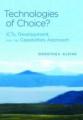
Technologies of Choice? – ICTs, development and the capabilities approach * Dr. Dorothea Kleine, Director of the ICT4D Centre, RHUL* Today, 6.30 pm Webcast live: http://cyber.law.harvard.edu/interactive/webcast http://nexa.polito.it/berkman-webcast-live ICT for development (ICT4D) scholars claim that the internet, radio and mobile phones can support development. Yet the dominant paradigm of development as economic growth is too limiting to understand the full potential of these technologies. One key rival to such econocentric understandings is Amartya Sen’s capabilities approach to development – focusing on a pluralistic understanding of people’s values and the lives they want to lead. In her book, /Technologies of Choice?/ (MIT Press 2013), Dorothea Kleine translates Sen’s approach into policy analysis and ethnographic work on technology adaptation. She shows how technologies are not neutral, but imbued with values that may or may not coincide with the values of users. The case study analyses Chile’s pioneering ICT policies in the areas of public access, digital literacy, and online procurement and the sobering reality of one of the most marginalised communities in the country where these policies play out. The book shows how both neoliberal and egalitarian ideologies are written into technologies as they permeate the everyday lives and livelihoods of women and men in the town. /Technologies of Choice?/ examines the relationship between ICTs, choice, and development. It argues for a people-centred view of development that has individual and collective choice at its heart. Discussant: Dr Nancy Hafkin (formerly UN Economic Commission for Africa) About Dorothea Dorothea Kleine is Senior Lecturer in Human Geography and Director of the interdisciplinary ICT4D Centre at Royal Holloway, University of London. In 2013 the Centre was named among the top 10 global think tanks in science and technology (U of Penn’ survey of experts, 2013) and has a highly recognised PhD and Masters programme in ICT for development. Dorothea’s work focuses on the relationship between notions of “development”, choice and individual agency, sustainability, gender and technology. She has published widely on these subjects, and has worked as an advisor to UNICEF, UNEP, EUAid, DFID, GIZ and to NGOs. She is a Fellow of the Royal Geographical Society (with the IBG). Dorothea will be discussing her new book, Technologies of Choice: ICTs, development and the capabilities approach (MIT Press 2013). Dr. Nancy J. Hafkin has been working on ICTs in Africa and other developing areas, with particular emphasis on gender, for more than three decades. At the UN Economic Commission for Africa she established the Program to Promote IT in Africa and developed the African Information Society Initiative. Nancy has written widely on IT, gender and international development. In 2000 the Association for Progressive Communications established the annual Nancy Hafkin Communications Prize competition for innovative communication projects in Africa. In 2012 she was in the first group of honorees inducted into the Internet Society Hall of Fame, in the category of “Global Connectors.” Link * MIT Press (2013), D. Kleine, /Technologies of Choice? <http://mitpress.mit.edu/books/technologies-choice-0>/
Jazz and Journalism: Reporting with Improvisation http://cyber.law.harvard.edu/events/luncheon/2013/06/amico * Laura Amico, Nieman-Berkman Fellow in Journalism Innovation* Today, 6.30 pm Webcast live: http://cyber.law.harvard.edu/interactive/webcast http://nexa.polito.it/berkman-webcast-live Improvisation theories, drawn mostly from jazz, have increasingly been applied to entrepreneurship, new product development, and other fields, but rarely, if ever, to journalism. Yet journalism is an industry built on improvisation, from the actions of reporters out in the field, to the deadline work of editors and page designers. More than that, it is an industry that needs a new framework in order to survive. Journalists must, I believe, be more agile, more open, more listening, and more willing to work as teams, take chances and improvise, if they are to succeed. At this luncheon, Laura will present her preliminary ideas on improvisation theory and jazz in news development, arguing for a journalism framework that builds new culture out of improvisation. About Laura Laura Amico is a Nieman-Berkman fellow in journalism innovation. Her work focuses on building more effective strategies for newsrooms to cover beats and build community engagement. Laura is CEO of Glass Eye Media, the company behind Homicide Watch, a Washington, D.C.-based website for data-driven coverage of violent crime that was recognized as a notable entry in the 2011 Knight-Batten Awards for Innovation in Journalism. News organizations and universities including the Sun Times, Digital First Media, and University of Colorado Boulder have partnered with Glass Eye Media to license the technology and use the community-driven approach to journalism that Glass Eye Media advocates. In 2013, Homicide Watch DC won the Knight award for public service journalism, was a finalist in the general excellence category for news sites by the Online News Association, and received a special citation from the National Press Foundation for online journalism. Laura has reported for the Register-Pajaronian and The Press Democrat in California, received a New York Times Chairman?s Award, and held fellowships with the Online News Association and the Harry Frank Guggenheim Symposium on Crime in America.

Present Shock: When Everything Happens Now http://cyber.law.harvard.edu/events/luncheon/2013/06/rushkoff * Douglas Rushkoff, author of Present Shock, in conversation with David Weinberger* Today, 6.30 pm Webcast live: http://cyber.law.harvard.edu/interactive/webcast http://nexa.polito.it/berkman-webcast-live The always-on, simultaneous society in which we have found ourselves has altered our relationship to culture, media, news, politics, economics, and power. We are living in a digital temporal landscape, but instead of exploiting its asynchronous biases, we are misguidedly attempting to extend the time-is-money agenda of the Industrial Age into the current era. The result is a disorienting and dehumanizing mess, where the zombie apocalypse is more comforting to imagine than more of the same. It needn't be this way. About Douglas Winner of the Media Ecology Association's first Neil Postman award for Career Achievement in Public Intellectual Activity, Douglas Rushkoff is an author, teacher, and documentarian who focuses on the ways people, cultures, and institutions create, share, and influence each other's values. He is technology and media commentator for CNN, digital literacy advocate for Codecademy.com <http://codecademy.com/> and has taught and lectured around the world about media, technology, culture and economics. His new book, Present Shock: When Everything Happens Now <http://rushkoff.com/present-shock>, explores the always-on, simultaneous society in which we live, as well has how this new temporal landscape influences media, culture, economics, politics, and meaning. His previous best-selling books on media and popular culture have been translated to over thirty languages. They include Program or Be Programmed: Ten Commands for a Digital Age <http://www.rushkoff.com/program-or-be-programmed/>, a followup to his Frontline documentary, Digital Nation <http://pbsdigitalnation.org/>, and Life Inc <http://www.rushkoff.com/life-inc/>, an analysis of the corporate spectacle, which was also made into a short, award-winning film <http://vimeo.com/4655092>. Links * http://rushkoff.com/present-shock * http://www.nytimes.com/2013/03/14/books/present-shock-by-douglas-rushkoff.ht...

Il Presidente del Consiglio della Provincia Autonoma di Trento <http://www.provincia.tn.it/> assieme alla Fondazione <ahref <http://www.ahref.eu/it> promuovo il convegno dal titolo Democrazia: cosa possono fare i media civici http://www.futurize.cc/democrazia_media_civici/ * Il convegno si terrà in Sala Aurora in Palazzo Trentini il 12 luglio 2013 dalle 9,30.* Le assemblee elettive ad ogni livello, dalla Provincia, alle Comunità di Valle, ai singoli Comuni, si confrontano quotidianamente con la necessità di restituire vigore agli istituti di rappresentanza politica, in particolare individuando strumenti e modalità nuove di coinvolgimento dei cittadini nella vita delle istituzioni, nel formarsi delle decisioni e nel controllo della loro attuazione. La promozione della partecipazione dei cittadini alla vita istituzionale è una caratteristica tradizionale del sistema politico trentino che oggi, attraverso un uso consapevole e ben progettato dei nuovi media digitali, può trovare un rinnovato sviluppo, con l’obiettivo di fare del Trentino un laboratorio di buona politica. Alla descrizione degli strumenti disponibili ed alle modalità del loro utilizzo è dedicata questa giornata di studio, nella quale sarà anche illustrato il rapporto *I media civici in ambito parlamentare: strumenti disponibili e possibili scenari d’uso* che la Fondazione <ahref ha realizzato in collaborazione con il Senato della Repubblica. Interverranno: Bruno Dorigatti <http://www.consiglio.provincia.tn.it/consiglio/presidente/chi_sono.it.asp?id...>, Presidente del Consiglio della Provincia Autonoma di Trento Vincenzo D’Andrea <http://www.futurize.cc/vincenzo-dandrea/>, professore dell’Università degli studi di Trento Luca De Biase <http://www.futurize.cc/luca-de-biase/>, presidente di Fondazione <ahref Juan Carlos De Martin <http://nexa.polito.it/people/jcdemartin>, co-fondatore del Centro Nexa su Internet & Società del Politecnico di Torino Giulio De Petra <http://www.futurize.cc/giulio-de-petra/>, rapporti con le p.a. della Fondazione <ahref Mauro Fioroni <http://it.linkedin.com/in/maurofioroni>, responsabile del Dipartimento Informatica del Senato modera Michele Kettmaier <http://www.futurize.cc/michele-kettmaier/>, direttore di Fondazione <ahref E' stato inoltre invitato il professore emerito *Stefano Rodotà*. L’evento è stato organizzato dalla Presidenza del Consiglio della Provincia Autonoma di Trento in collaborazione con la Fondazione <ahref. La locandina dell'evento è disponibile all'indirizzo: http://www.futurize.cc/files/a4_12luglio.pdf -- Giuseppe Futia Communication Manager Nexa Center for Internet & Society Politecnico di Torino - DAUIN Corso Duca degli Abruzzi, 24 - 10129 Torino web: http://nexa.polito.it mail: giuseppe.futia@polito.it tel: +39 011 090 7219
Creating a Law School e-Curriculum http://cyber.law.harvard.edu/events/luncheon/2013/07/goodenough * Oliver R. Goodenough, Berkman Center Fellow* Today, 6.30 pm Webcast live: http://cyber.law.harvard.edu/interactive/webcast http://nexa.polito.it/berkman-webcast-live Legal practice and legal education both face disruptive change. Much of how and what we do as lawyers and how and what we have taught as legal educators is under scrutiny. Legal technology is an important factor in driving these challenges. Law schools reform their curriculums law and technology is an area that is ripe for expansion in our teaching. It also provides ample room for scholarly examination. Creating opportunities for learning how technology is shaping legal practice should be a priority for any school looking to provide a useful education for the lawyers of the present, let alone the future. About Oliver Oliver R. Goodenough is currently a fellow at The Berkman Center for Internet and Society at Harvard Law School, a Professor of Law at the Vermont Law School and an Adjuct Professor at Thayer School of Engineering at Dartmouth College. He has also held appointments as a Visiting Professor in the Department of Neurology at Charité Universitätsmedizin, Berlin, a Visiting Research Fellow in the Department of Zoology at the University of Cambridge and a Lecturer at the University of Pennsylvania Law School. He is a Research Fellow of the Gruter Institute for Law and Behavioral Research, and heads its Planning and Programming Committee (more <http://cyber.law.harvard.edu/people/ogoodenough>). Link * Developing an E-Curriculum: Reflections on the Future of Legal Education and on the Importance of Digital Expertise <http://papers.ssrn.com/sol3/papers.cfm?abstract_id=2255005>

Is beautiful really usable? Understanding how aesthetics and usability influence user experience http://cyber.law.harvard.edu/events/luncheon/2013/9/Bargas-Avila * Javier Bargas-Avila, User Experience Researcher, Google (Switzerland)* Today, 6.30 pm Webcast live: http://cyber.law.harvard.edu/interactive/webcast http://nexa.polito.it/berkman-webcast-live Ever come across a product that looked beautiful but was awful to use? Or stumbled over a something that was ugly as hell but just did exactly what you wanted? Ever wondered how these factors work together, and how they influence the experiences we create? Product usability and aesthetics are coexistent, but they are not identical. In this talk I will give you an overview over existing research in this field and present the latest findings that show how usability, aesthetics and affect work together to create great - or not so great - experiences. About Javier Javier Bargas-Avila holds a PhD in Cognitive Psychology and works as Senior User Experience Researcher & Manager at Google (Switzerland). Before joining Google he was the manager of the HCI lab at the University of Basel (Switzerland) from 2004 to 2011. He published over 20 peer reviewed papers in HCI journals and conferences covering topics such as user satisfaction, mental models in website perception, first visual impression of websites or webform usability. Since 2011 he is part of the YouTube UX research team, where he currently focuses on internationalization, monetization and analytics. Specialties: user studies, usability studies, user experience, experimental studies, cognitive psychology, online surveys, online experiments, user satisfaction, web form usability, aesthetics, usability.

Curated by the Crowd: collections, data, and platforms for participation in museums and other institutions http://cyber.law.harvard.edu/events/luncheon/2013/9/metalab * Hosted by metaLAB's Jeffrey Schnapp, Matthew Battles and Pablo Barría Urenda* Today, 6.30 pm Webcast live: http://cyber.law.harvard.edu/interactive/webcast http://nexa.polito.it/berkman-webcast-live Curarium is a collection of collections, an “animated archive,” designed to serve as a model for crowdsourcing annotation, curation, and augmentation of works within and beyond their respective collections. A web-based platform, Curarium aims to construct sharable, media-rich stories and elaborate arguments about individual items as well as groups of items within a corpora. The first project to be ingested into Curarium is Villa I Tatti’s Homeless Paintings of the Italian Renaissance collection, a unique archive of photographs of “homeless” paintings assembled by art historian Bernard Berenson. Taking the collection and its metadata out of VIA and putting it into Curarium will allow engagement with a wider audience, which will then identify, classify, describe and analyze the objects in the collection, as well as reconstruct the stories of objects that have either disappeared or been destroyed. About Jeffrey Jeffrey Schnapp is the Faculty Director of metaLAB, and a Professor of Romance Languages and Literatures in the Faculty of Arts and Sciences and in the Department of Architecture at the Graduate School of Design. He is the author twenty-five books and several hundred essays, and in addition to playing a leadership role in the area of digital humanities since the early 1980s, he has pursued curatorial collaborations with the Triennale di Milano, the Cantor Center for the Visual Arts, the Wolfsonian-FIU, and the Canadian Center for Architecture. His Trento Tunnels project <http://www.legallerie.tn.it/> — a 6000 sq. meter pair of highway tunnels in Northern Italy repurposed as a history museum– was featured in the Italian pavilion of the 2010 Venice Biennale of Architecture and at the MAXXI in Rome in RE-CYCLE. About Matthew Matthew Battles is the Associate Director of metaLAB and a fellow at the Berkman Center for Internet and Society. The author of Library: an Unquiet History and Widener: Biography of a Library, he has written widely on the cultural and intellectual history of collections. He managed the publication program at Harvard’s Houghton Library, designing scholarly publications and exhibition catalogs and helping to design and stage exhibitions; he also served as senior scholarly editor for the Museum of Fine Arts, Boston. About Pablo Pablo Barría Urenda holds a degree in Architecture by the Federico Santa María Technical University in Valparaíso, Chile, and a Masters in Architecture from the Harvard Graduate School of Design. He is interested in the intersection between design and digital media, and has worked with metaLAB as an interface designer in a number of projects including Teaching with Things and Homeless Paintings. Links * metaLAB <http://metalab.harvard.edu/> * Curarium <http://www.curarium.com/>

The Electronic Silk Road: How the Web Binds the World http://cyber.law.harvard.edu/events/luncheon/2013/10/chander * Anupam Chander, Director of the California International Law Center and professor of law at the University of California, Davis* Today, 6.30 pm Webcast live: http://cyber.law.harvard.edu/interactive/webcast http://nexa.polito.it/berkman-webcast-live On the ancient Silk Road, treasure-laden caravans made their arduous way through deserts and mountain passes, establishing trade between Asia and the civilizations of Europe and the Mediterranean. Today’s electronic Silk Roads ferry information across continents, enabling individuals and corporations anywhere to provide or receive services without obtaining a visa. But the legal infrastructure for such trade is yet rudimentary and uncertain. If an event in cyberspace occurs at once everywhere and nowhere, what law applies? How can consumers be protected when engaging with companies across the world? From Facebookistan, to online gambling and PRISM, the new trade routes raise urgent questions of law and policy. About Anupam Anupam Chander is Director of the California International Law Center and professor of law at the University of California, Davis. A graduate of Harvard College and Yale Law School, he has been a visiting professor at Yale, Chicago, Stanford and Cornell law schools.

Getting from No to Go: Social Media-Fueled Protest Style From Arab Spring to Gezi Protests in Turkey http://cyber.law.harvard.edu/events/luncheon/2013/10/tufekci * Zeynep Tufekci, assistant professor at the University of North Carolina and faculty associate at Berkman Center for Internet & Society* Today, 6.30 pm Webcast live: http://cyber.law.harvard.edu/interactive/webcast http://nexa.polito.it/berkman-webcast-live What can we learn from the protest wave of the last years? How does social media impact the capacity for collective action? Does social media contribute to blunting movement impacts by facilitating horizontal, non-institutional and "leaderless" movements? How do these movements compare with their predecessors like the civil-rights or anti-colonial movements? I discuss these questions by drawing from research on a variety of social movements including the "Arab Spring", European indignados movements, Occupy and Turkey's Gezi protests. About Zeynep Zeynep Tufekci is an assistant professor at the University of North Carolina, a faculty associate at Berkman Center for Internet & Society at Harvard University and a fellow at the Center for Information Technology Policy at Princeton University.

The New Nollywood http://cyber.law.harvard.edu/events/luncheon/2013/10/nollywood * Aimee Corrigan, Nollywood Workshops/Berkman Center & Colin Maclay, Berkman Center* Today, 6.30 pm Webcast live: http://cyber.law.harvard.edu/interactive/webcast http://nexa.polito.it/berkman-webcast-live Nigeria's booming movie industry, known as Nollywood, rivals Hollywood and India's Bollywood as one of the world's largest producer of feature films. In less than two decades Nollywood has grown into an industry estimated at $250 million, employing over a million people and producing over 1000 films each year – a major success story in Nigeria’s economy. Nollywood's movies have an audience of millions in Nigeria, throughout Africa and around the world - from Bombay to Brooklyn. The phenomenon of Nollywood is internationally recognized for quantity of films - but not for quality. The industry faces big challenge stemming from limited financing opportunities and rampant piracy. Today, in an effort to overcome these challenges, leading filmmakers in Nigeria consider themselves part of a growing movement they call “New Nollywood”. This movement refers to an increasing trend of better quality films, stemming from increased access to new technology and equipment, training, new sources of financing, and alternative distribution. As Nigeria’s most popular entertainment platform, Nollywood is positioned as an extraordinary vehicle for engaging content. Nollywood filmmakers are confronting their society’s critical and controversial issues – including health and corruption. The widespread viewing of Nollywood films speaks to their ability to culturally connect with hundreds of millions of people. Nollywood’s massive and engaged audience is the envy of filmmakers around the world. About Aimee and Colin *Aimee Corrigan* is the Co-Director of Nollywood Workshops, a hub for filmmakers in Lagos, Nigeria that supports and delivers movie production and distribution, training, and research. She is also a documentary photographer and filmmaker. Aimee's passion for Nollywood sparked during her participation in the production of the documentary This Is Nollywood. Aimee is currently a fellow at the Berkman Center. Aimee completed her Masters in Education at Harvard University's Graduate School of Education. *Colin M. Maclay* is the Managing Director of the Berkman Center, where he is privileged to work in diverse capacities with its faculty, staff, fellows and extended community to realize its ambitious goals. His broad aim is to effectively and appropriately integrate information and communication technologies (ICTs) with social and economic development, focusing on the changes Internet technologies foster in society, policy and institutions. Both as Co-founder of the Information Technologies Group at Harvard’s Center for International Development and at Berkman, Maclay’s research has paired hands-on multi stakeholder collaborations with the generation of data that reveal trends, challenges and opportunities for the integration of ICTs in developing world communities. Colin and Aimee's work in Nollywood stems from work of an intercontinental team drawing from the Berkman Center at Harvard University, Digital Bridge Institute (DBI) in Nigeria, Georgia Institute of Technology, MIT Center for Civic Media, Hollywood, Health & Society at USC Annenberg's Norman Lear Center, and Nollywood Workshops. The team has been collaborating with filmmakers in Nigeria since 2005.

The Innovation Intermission http://cyber.law.harvard.edu/events/luncheon/2013/10/contee * With Cheryl Contee, CEO of Fission Strategy and Co-Founder at Attentive.ly* Today, 6.30 pm Webcast live: http://cyber.law.harvard.edu/interactive/webcast http://nexa.polito.it/berkman-webcast-live The stereotypes of those who are tech-savvy don't necessarily match the reality. Whites in America currently lag behind all other ethnicities in their use of advanced internet services, smartphones and social media. Women are more likely than men to use mobile social media. Mothers are one of advertisers' most targeted demographic and 93% of American moms use the internet, compared to 60-70% of the U.S. overall population. But current investments in new technology don't not match the consumers of these technologies. According to the Kaufmann Foundation, only 4% of venture capital of any kind goes to female tech entrepreneurs. This discussion will explore the trends currently changing the economy and our society. Does this gap between creators and consumers matter? Are we in an innovation intermission, poised on the threshold of another great wave of technological creativity as access to tools are democratized? Society is being reshaped through increased social connectivity. As each person becomes a technologist, we are actively engaged in creating the future today in which we will live together tomorrow. Come discuss the shape of the future to come and the portending signs that currently surround us. About Cheryl Cheryl Contee, Partner at Fission Strategy, specializes in helping non-profit organizations and foundations use social media to create social good. She is also the co-founder of Jack and Jill Politics writing as "Jill Tubman" on one of the top black blogs online. Cheryl was recently named as an Affiliate of Harvard University's Berkman Center for Internet & Society. Cheryl is included in The Root 100 list of established and emerging African-American leaders. Huffington Post listed her as one of the Top 27 Female Founders in Tech to Follow on Twitter in 2011. Fast Company named her one of their 2010 Most Influential Women in Tech. She has over 15 years of award-winning interactive expertise and previously served as Vice President and lead digital strategist for Fleishman-Hillard's West Coast region in San Francisco. Cheryl has appeared in and/or on the Washington Post, the New York Times, San Francisco Magazine, the BBC, Current TV and CNN, among many other media appearances. She is also proud to serve on several boards and advisory committees, including Netroots Nation, BlogHer, Focus100/Digital Undivided, and Public Radio International. She received her B.A. from Yale University and has an International Executive M.B.A. from Georgetown University. In her spare time, Ms. Contee enjoys hiking, yoga, movies and tai chi sword. Links * 93% of American moms use the internet <http://www.slideshare.net/webby2001/moms-and-media-2012> * Jack and Jill Politics <http://www.jackandjillpolitics.com/> * The Root 100 <http://www.theroot.com/views/root-100> * 27 Female Founders in Tech to Follow on Twitter <http://www.huffingtonpost.com/2011/08/29/female-founders-in-tech-to-follow-o...> * 2010 Most Influential Women in Tech <http://www.fastcompany.com/article/cheryl-contee-fission-strategy>

The Fight for the Future: How People Defeated Hollywood and Saved the Internet--For Now http://cyber.law.harvard.edu/events/luncheon/2013/11/lee * Edward Lee, Professor of Law & Director of the Program in Intellectual Property Law at IIT Chicago-Kent College of Law* Today, 6.30 pm Webcast live: http://cyber.law.harvard.edu/interactive/webcast http://nexa.polito.it/berkman-webcast-live This talk will explain how a grassroots movement involving millions of people was able to defeat money, politicians, Hollywood, and the copyright lobby, all in the name of a "free and open Internet." People used Facebook, Twitter, other social media, blogs, and websites to organize and launch protests against SOPA and ACTA, two controversial copyright proposals in the United States and European Union that many feared would lead to Internet censorship. Participants will learn how the Internet helped people fight for their Internet freedoms--and do the unthinkable in stopping powerful lobbyists and the entertainment industry in their effort to clamp down on online piracy at all costs. About Ed Edward Lee is a Professor of Law and the Director of the internationally recognized Program in Intellectual Property Law at IIT Chicago-Kent College of Law. He graduated summa cum laude from Williams College with a bachelor's degree in philosophy (highest honors) and classics, and cum laude from Harvard Law School. His Boston Review article The Day Wikipedia Went Dark was published on the one year anniversary of the Wikipedia blackout. As a contributor to the Huffington Post, he has written various articles related to the Internet, copyright, and pop culture. As a law professor, he has written extensively about free speech and copyright law, and the history of the freedom of the press. Previously, he worked with Lawrence Lessig at the Stanford Center for Internet and Society, including on Eldred v. Ashcroft and Golan v. Holder, two of the most significant cases involving the First Amendment and copyright law. Links * http://thefightforthefuture.com * FB: https://www.facebook.com/thefightforthefuturebook * Twitter: https://twitter.com/edleepro
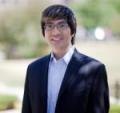
Science fiction or reality? A discussion of near-term ethical, legal, and societal issues in robotics http://cyber.law.harvard.edu/events/luncheon/2013/11/darling * Kate Darling, Berkman Center Fellow* Today, 6.30 pm Webcast live: http://cyber.law.harvard.edu/interactive/webcast http://nexa.polito.it/berkman-webcast-live Prominent robot ethics questions focus on liability and privacy concerns in the face of increasingly autonomous technology. A lesser-discussed issue is the emergence and effect of robots that are designed to interact with humans on a social level. Studies have begun to establish a tendency to perceive social robots differently than we do other objects. As more and more robotic companions enter into our lives and homes, our inclination to project life-like qualities onto robots could have some societal implications. About Kate Kate Darling is an IP Research Specialist at the Massachusetts Institute of Technology (MIT) Media Lab and a Ph.D. candidate in Intellectual Property and Law & Economics at the ETH Zurich. After surviving law school, she went on to pursue her passion for innovation policy at the intersection of law and technology. Her work has covered economic issues in copyright and patent systems, and she now also increasingly writes and lectures about robotics and law, with a particular interest in social and ethical issues.

Cooperation in a Peer Production Economy: Experimental Evidence from Wikipedia http://cyber.law.harvard.edu/events/luncheon/2013/12/hergueux * Jerome Hergueux, Berkman Center Fellow* Today, 6.30 pm Webcast live: http://cyber.law.harvard.edu/interactive/webcast http://nexa.polito.it/berkman-webcast-live From Wikipedia to Open Source Software, Peer Production -- a large-scale collaborative model of production primarily based on voluntary contributions -- is emerging as an economically significant production model alongside firms, markets and governments. Yet, its impressive success remains difficult to explain through the assumptions of standard economic theory. In this talk, Jerome Hergueux will engage the audience in a reflection about the prosocial foundations of cooperation in this new Peer Production economy, taking Wikipedia as one paradigmatic example. Based on the results from an online game-theoretic experiment in which hundreds of Wikipedia contributors took part, Jerome will assess economics' traditional understanding of the other-regarding motives that can foster online cooperation. In this process, he will ask the question: how can we start to build a workable theory of individuals' motivations to freely contribute time and efforts for the provision of global public goods? About Jerome Jerome is a Ph.D. candidate in Economics at Sciences Po (Department of Economics) and the University of Strasbourg (Institute of Political Studies) specialized in behavioral economics and experimental methods. He is a Research Fellow at the Berkman Center for Internet & Society at Harvard University (2011-2014), where he does most of his Ph.D. work. At Berkman, Jerome couples tools from experimental economics and computational social science to uncover how social preferences shape our behavior over the Internet. He is strongly involved in Professor Yochai Benkler's Cooperation project. He is also involved with the Mindsport Research Network, which he helped launch together with Professor Charles Nesson in 2011. Jerome is primarily interested in applying the analytical tools of experimental and behavioral economics to the understanding of the evolution of culture, broadly defined as any set of norms of cooperation shared by a group of individuals trying to overcome particular collective action issues (be it in online or offline settings). He then tries to assess the relevance of those norms for determining a wide range of economic outcomes at the community level. Jerome originates from the French region of Alsace. He holds a B.A. in Economics and Finance from the University of Strasbourg and Masters degrees in International Relations and Affairs and International Economics and Trade from Sciences Po. Jerome speaks French, English and Arabic, and is heavily interested in the Middle East's politics and culture.

Re-Thinking Intellectual Property Rights (IPR) Models for the Poor http://cyber.law.harvard.edu/events/luncheon/2013/12/boettiger * Sara Boettiger, Global Access in Action Project* Today, 6.30 pm Webcast live: http://cyber.law.harvard.edu/interactive/webcast http://nexa.polito.it/berkman-webcast-live We are depending on new technologies to meet the challenges ahead for our planet. Facing a growing population, resource constraints, climate change and a global food system under stress, we are pinning our hopes on new technology. But we don't do a good job of leveraging our innovation systems to impact the poor. 780 million still lack access to clean water. 1/5 of humanity lives without electricity. 80% of sub-Saharan Africa is farmed with a hand-hoe. IPR is the fundamental driver of innovation, but donors, practitioners and policymakers are more divided than ever in their views on how IPR can be used to impact the poor. Sara Boettiger will discuss the need to re-think existing models (e.g. patent pools, clearinghouses, humanitarian use licensing), re-invent our research agenda and work to shift the international debate. About Sara Sara Boettiger is Senior Advisor at Syngenta Foundation for Sustainable Agriculture and Assistant Adjunct Professor at UC Berkeley. She is co-founder of four non-profits centered on the application of technology to meet the challenges of global poverty, including: PIPRA, Global Access in Action, GATD and AgPartnerXChange. Dr. Boettiger serves on World Economic Forum Global Agenda Councils and is active in corporate governance, currently serving on the Board of the Planetary Skin Institute. Dr. Boettiger's work focuses on: demand-driven innovation, public-private partnerships, commercialization strategies, intellectual property rights, and new product development principles applied to technologies for the poor. She has consulted for the Bill & Melinda Gates Foundation, World Bank, McKinsey & Company, and many others. She received her Ph.D. from UC Berkeley in Agricultural and Resource Economics and publishes on the law and economics of intellectual property rights, innovation, and poverty.

participants (1)
-
 Giuseppe Futia